
Hydroponic Growrooms During a Heatwave
Control temperatures and humidity...
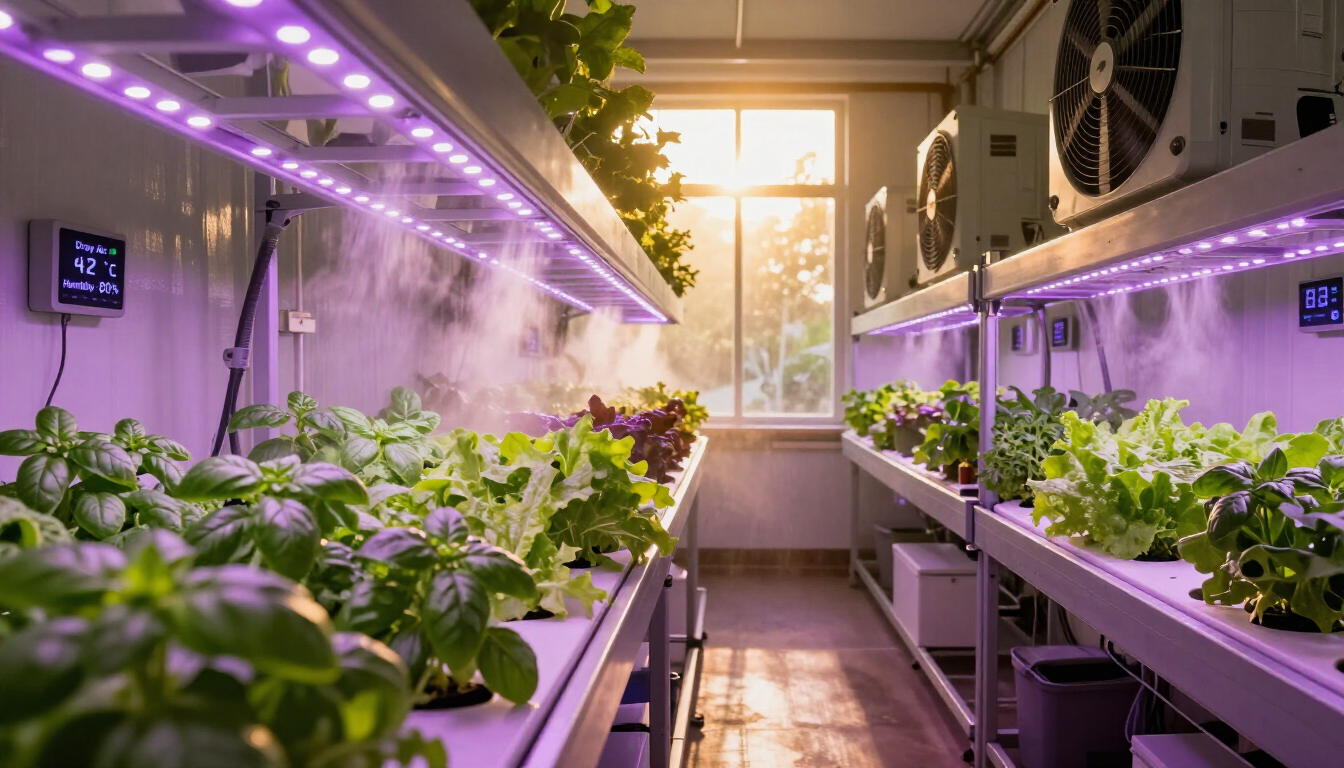
Hot, humid weather is one of the hardest environments for a hydroponic growroom because plants transpire less, pathogens spread faster, and dissolved oxygen in the nutrient solution drops. The main goals are:
- keep leaf temperatures under control
- reduce stagnant humid air
- protect roots from warm nutrient solution
- prevent mould, mildew, and rot
| Stage | Air Temp | Relative Humidity | Reservoir Temp |
|---|---|---|---|
| Seedlings | 22-26 °C | 65-75% | 18-20 °C |
| Vegetative | 20-28 °C | 55-70% | 18-21 °C |
| Flowering/Fruiting | 20-26 °C | 40-55% | 18-20 °C |
Once humidity stays above ~75% for long periods, fungal problems become much more likely.
Airflow becomes critical
In humid weather, airflow matters more than raw temperature.
What to do
- Run oscillating fans continuously
- Keep air moving both:
- above the canopy
- underneath the plants
- Increase extraction fan speed during lights-on
- Avoid “dead corners” where air sits still
Plants should gently sway, not bend violently.
Use dehumidification strategically
A dehumidifier is often the single biggest improvement in humid conditions.
Best practice
- Run it mostly during lights-off periods
- Empty the tank frequently or use continuous drainage
- Size it for the room volume, not just temperature
Humidity spikes at night because transpiration continues while temperatures drop.
Keep nutrient solution cool
Warm reservoirs are a major danger in summer.
Problems above 22°C
- lower dissolved oxygen
- root rot pathogens spread faster
- slimy roots and pythium risk increase
Ways to cool the reservoir
- Insulate the tank
- Keep reservoirs off hot floors
- Use frozen water bottles temporarily
- Add an aquarium chiller for serious setups
- Increase aeration with larger air stones
More dissolved oxygen helps roots survive heat stress.
Reduce lighting heat load
If your room overheats:
- Raise grow lights slightly
- Dim LEDs during heat waves
- Run lights at night instead of daytime
- Improve ducting around HID fixtures
Night-cycle lighting can dramatically lower temperatures in summer.
Watch for nutrient issues in humidity
High humidity changes plant water uptake.
Common effects
- Plants drink less water
- Nutrient concentration can rise unexpectedly
- Calcium uptake problems become more common
Adjustments
- Monitor EC more frequently
- Reduce feed strength slightly if plants slow uptake
- Ensure strong calcium and magnesium availability
- Avoid overwatering media-based systems
Disease prevention
Humid growrooms can develop problems very quickly.
Watch for
- powdery mildew
- botrytis (bud rot)
- leaf spot
- root rot
Prevention tips
- Remove dead leaves immediately
- Defoliate dense canopies carefully
- Avoid leaf surfaces staying wet
- Sanitize tools and reservoirs regularly
- Keep spacing between plants
CO₂ considerations
If using supplemental CO₂
:
- Higher temperatures become more tolerable
- But humidity control still matters
- Poor airflow with CO₂ can still cause mould
Without CO₂ enrichment, very high temperatures usually reduce growth.
Signs your room is too humid
Look for:
- leaves drooping despite wet roots
- condensation on walls or ducting
- weak transpiration
- slow growth
- mould smell
- curling leaves with damp media
Simple emergency heat-wave actions
During extreme hot/humid spells:
- Run lights overnight
- Increase extraction fan speed
- Add temporary portable AC
- Lower nutrient strength slightly
- Add extra aeration to reservoirs
- Remove excess foliage
- Check roots daily
Good growroom upgrades for humid climates
These make the biggest difference long-term:
- inverter portable AC
- properly sized dehumidifier
- insulated reservoir
- environmental controller
- EC/pH automation
- high-efficiency LED lighting
If you want, we can also help with:
- humid-weather hydroponic schedules
- crop-specific advice (lettuce, tomatoes, cannabis, herbs, peppers, etc.)
- VPD tuning
- DIY cooling ideas
- small tent setups vs full growrooms
- preventing powdery mildew naturally