
The best way to use nutrients in a Hydroponic grow room
Check out the various steps for a splendid yield!
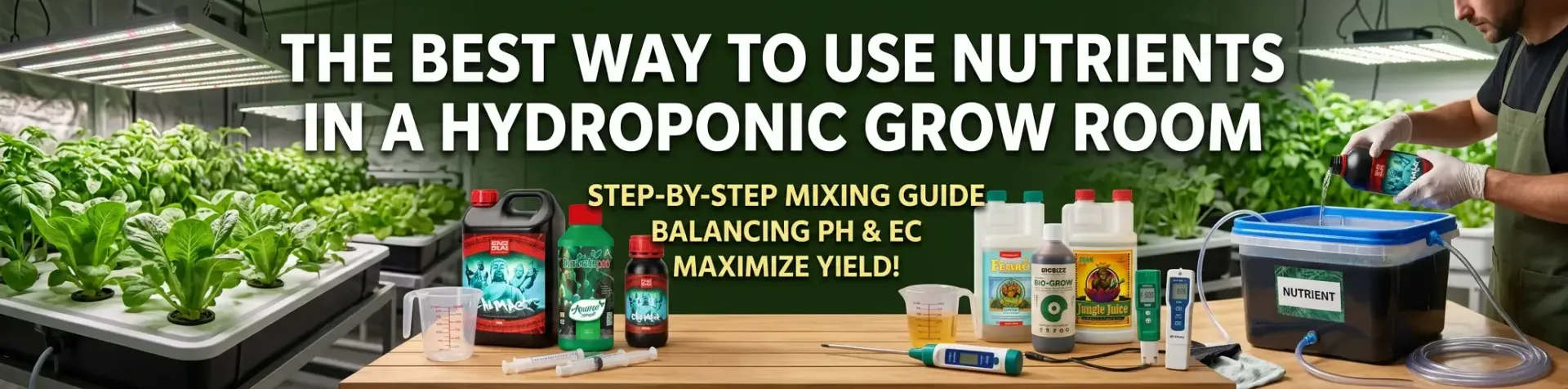
Getting nutrients right in a hydroponic grow room is less about dumping in “more” and more about control, consistency, and observation. Plants in hydroponics rely entirely on what you provide, so small mistakes show up quickly—but so do improvements.
Start with the foundation: water quality. If your source water is inconsistent or high in minerals, consider using filtered or reverse osmosis water so you can fully control what goes in. From there, always mix nutrients in the correct order (usually base nutrients first, then additives) and never combine concentrates directly—they can lock out each other.
The two numbers that matter most are pH and EC (electrical conductivity). pH determines whether plants can absorb nutrients at all. Most crops thrive between about 5.5 and 6.5, but slight variation within that range helps different nutrients become available over time. EC tells you how strong your nutrient solution is—too low and plants starve, too high and you risk nutrient burn. It’s better to start slightly under the recommended strength and increase gradually as plants grow.
Consistency beats complexity. Instead of constantly changing formulas, stick to a feeding schedule that matches your plant’s stage—vegetative growth needs more nitrogen, while flowering or fruiting shifts toward phosphorus and potassium. Sudden swings in nutrient strength or pH can stress plants more than a slightly imperfect mix.
Oxygenation is often overlooked. Roots need oxygen as much as nutrients, so keep your solution well-aerated and at a reasonable temperature (usually around 18–22°C). Warm, stagnant water reduces oxygen and invites root diseases.
Regular maintenance makes a big difference. Replace your reservoir solution every 1–2 weeks instead of endlessly topping it up, which can lead to imbalances. Between changes, monitor and adjust pH daily if needed, and keep an eye on how quickly EC drops—that tells you how much your plants are feeding.
Finally, pay attention to the plants themselves. Leaf color, tip burn, curling, or slow growth are early signals. Hydroponics rewards growers who observe and tweak rather than blindly follow charts.
If you want, tell us what you’re growing and your setup (DWC, NFT, drip, etc.), and we can give a more personalised nutrient strategy.