
Key Pro-Tips for Hydroponics using AC Infinity
AC Infinity is the Next Level and Next Stage for Professional Hydroponic Plant Growth
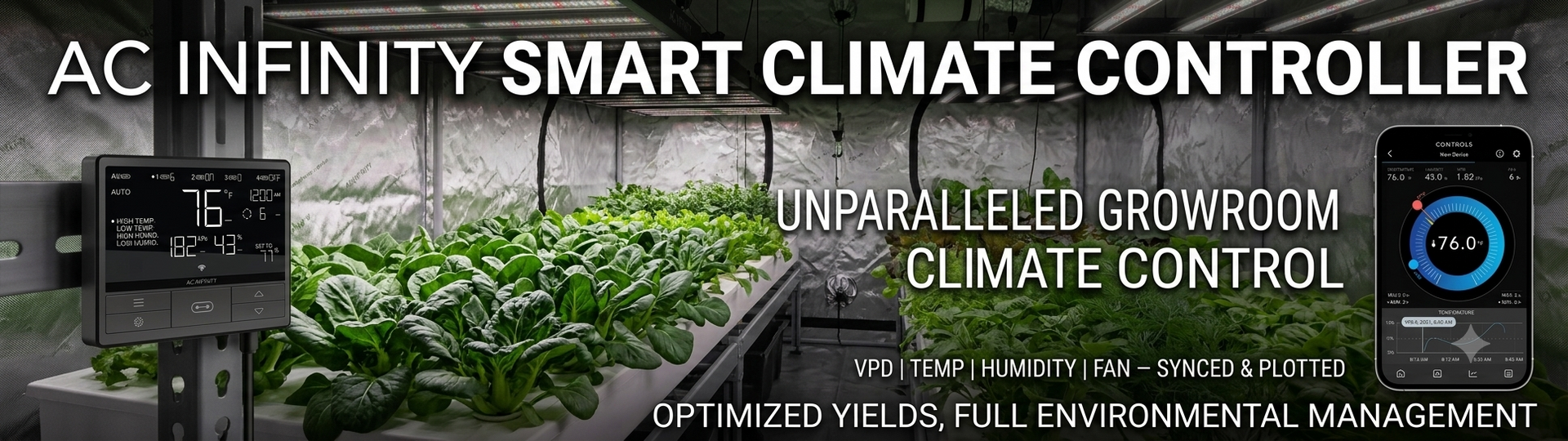
AC Infinity is the next level and next stage for professional hydroponic plant growth and here are some useful tips and suggestions.
Integrating AC Infinity equipment into a hydroponics environment gives you automated control over
temperature, relative humidity (RH), and Vapor Pressure Deficit (VPD)—which is especially vital in hydroponics due to higher transpiration rates compared to soil growing.
Key Pro-Tips for Hydroponics
- Keep Water Tanks Cool: Keep your hydroponic reservoir temperature between 65°F–68°F (18°C–20°C). If ambient air gets too warm due to insufficient fan exhaust, warm reservoir water loses dissolved oxygen rapidly, leading to root rot (Pythium).
- Avoid Over-Sizing / Under-Sizing Fans: For standard tents (e.g., 4'x4'x7'), a 6-inch Cloudline fan (~400+ CFM) is the sweet spot. It allows running the fan at lower, quieter speeds (speeds 3–6) while still moving enough air through a restrictive carbon filter.
- Pre-Filter Maintenance: Hydroponics environments can accumulate high ambient moisture. Wash the white fabric pre-filter on your carbon filter every few months to prevent dust from clogging the pore structure of the activated carbon.
- UIS Expansion: If using supplemental humidifiers or dehumidifiers (e.g., AC Infinity Cloudforge), plug them into spare UIS ports or smart outlets so the single controller manages the entire ecosystem seamlessly.
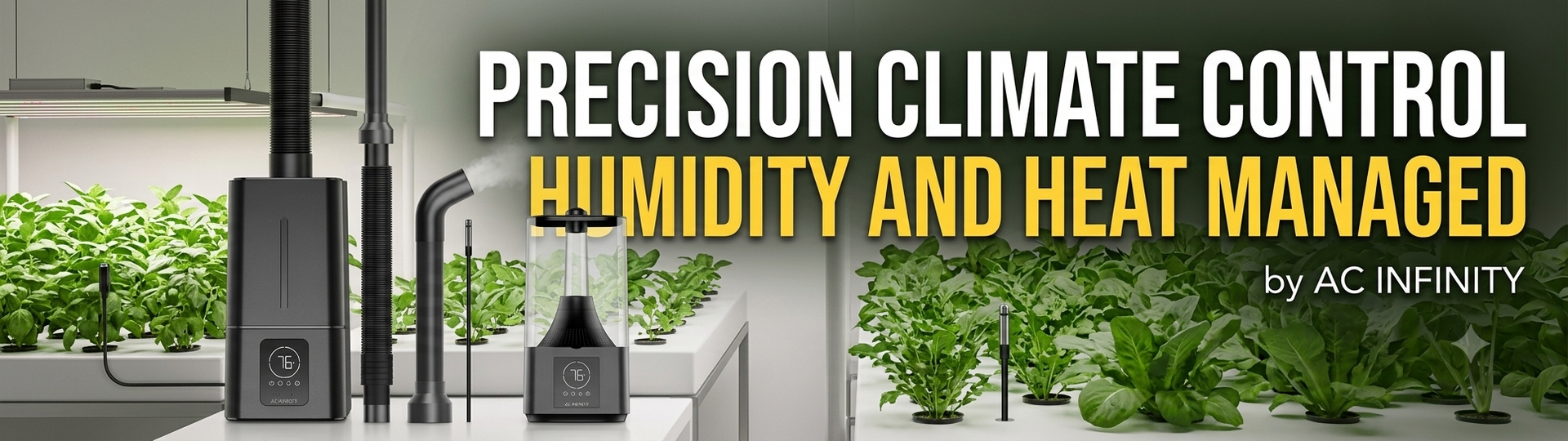
Core Equipment Components
- Cloudline Inline Duct Fan: Drives primary intake or exhaust. Uses PWM/EC motors for quiet operation and variable speed adjustments (0–10 speeds).
- Carbon Air Filter Kit: Activated carbon filter paired with flexible ducting and clamps to scrub odors, spores, and dust before air exhausts outside the space.
- Smart Controller (e.g., Controller 69 / Controller 69 PRO): The central brain. Connects via UIS (Universal Infinite System) cables to monitor temp/humidity and trigger fan speeds based on set targets or VPD triggers.
- Cloudray Oscillating Clip Fans: Internal circulation fans that break up microclimates and strengthen plant stems without creating severe wind burn.
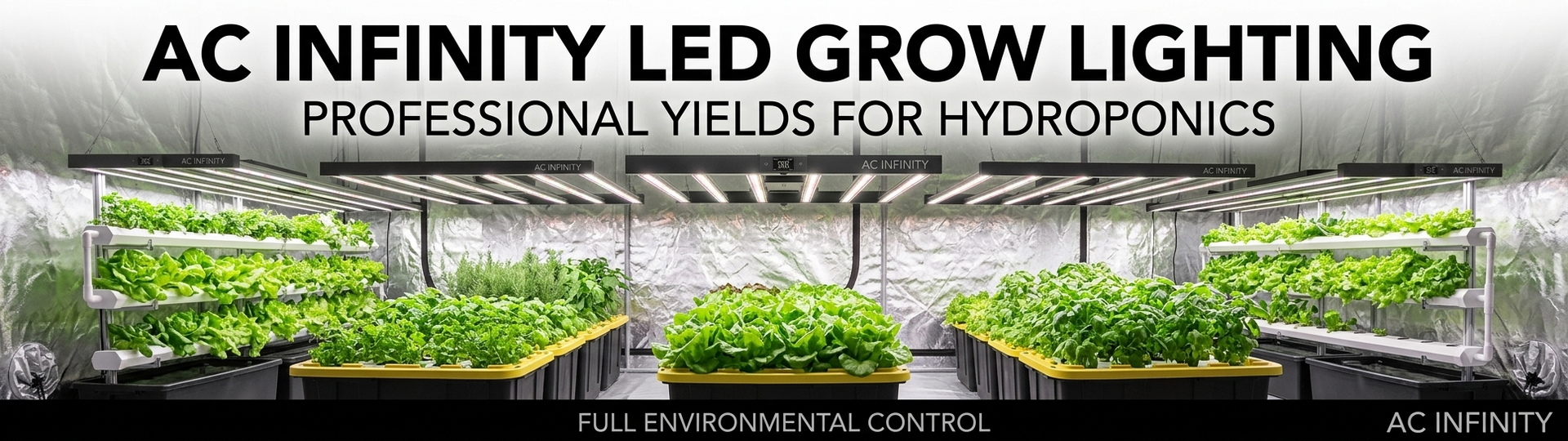
Standard Exhaust System Setup
In a hydroponic grow tent or enclosed room, setting up negative air pressure ensures air only leaves through the carbon filter.
Configuration Sequence:
Carbon Filter (Inside Tent Top) → Ducting → Cloudline Inline Fan → Exhaust Out of Room
- Mounting the Filter: Hang the carbon filter at the highest point inside the tent using ratcheting straps, as heat and humidity rise.
- Connecting the Inline Fan: Attach the fan directly to the filter or via a short duct run. Ensure the directional airflow arrow points outward toward the exhaust port.
- Placing the Probe: Route the smart controller's thermal/humidity sensor down to
canopy height, shielded from direct light if possible, to measure ambient conditions where the leaves actually breathe.
Hydroponic-Specific Automation Strategies
Because hydroponic systems (like DWC, NFT, or drip irrigation) hold open water reservoirs and moist media, ambient humidity climbs quickly.
| Metric | Target / Strategy | AC Infinity Controller Setup |
|---|---|---|
| - | - | - |
| VPD (Vapor Pressure Deficit) | Veg: 0.8–1.1 kPa | Set Controller 69 to VPD Mode so inline fan speed scales dynamically to maintain target transpirational pressure rather than just raw temp. |
| Flower: 1.2–1.5 kPa | ||
| - | - | - |
| High Humidity Spikes | Prevent mould/bud rot when root zones release moisture. | Set a High RH Trigger (e.g., max 65% in Veg, 50% in Flower) to kick the fan to higher speeds automatically. |
| - | - | - |
| Minimum Airflow | Keep fresh CO₂ flowing even when temp/RH are within target. | Use the Min Speed setting (e.g., Level 1 or 2) so the exhaust never turns completely off, maintaining gentle negative pressure. |
| - | - | - |
| Nighttime Humidity Creep | Lights-off drops temp while humidity spikes. | Program buffer offsets or night-specific triggers in the AC Infinity App to ramps up exhaust speed at lights-out. |
Click here to check the full range from AC Infinity